
Database reactivation
Pays for everything in week one.
This is where the name comes from. You have data — a list of people who already paid you once. Data Chasing chases what is hiding in it: reviews, referrals and repeat customers, on autopilot. You answer the phone.
Most businesses never text that list again. Data Chasing loads it, sends a two-text sequence, and books the ones who are ready.
- What you do
- Answer the phone.
- When you see it
- Week one.
Website design for contractors
Turns the clicks the rest of the system earns into phone calls.
A real site built for your trade and your city — not a template with your logo dropped in. Every page is coded by hand. No page builder, no drag-and-drop, no theme carrying twenty features you will never use and paying for all of them in load time.
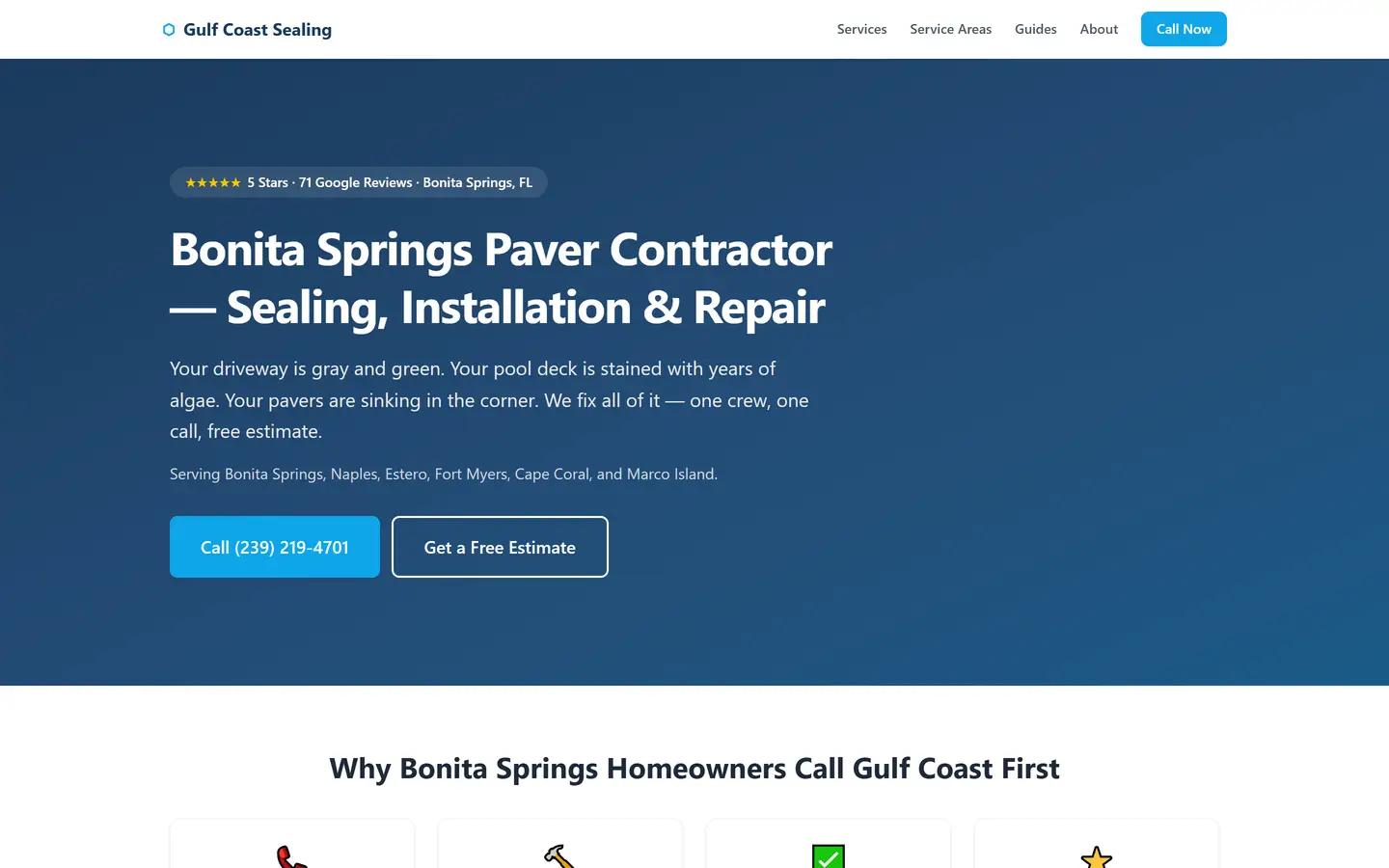
That matters because slow sites lose the click you already paid for. This page is the proof: run it through Google’s PageSpeed Insights and it comes back 100 for accessibility, best practices and SEO, and 99–100 for performance. Data Chasing builds your site the same way.
It is built to Google’s own published rules, and marked up so Google can read your business like a database rather than a brochure — what you do, where you do it, and how to contact you, stated in a format a machine cannot misread.
- What you do
- Send photos and answer a few questions.
- When you see it
- Two to three weeks.
Google Business Profile management
Puts you on the map where locals actually click — and feeds part 06.
You check a restaurant’s reviews before you eat there. Homeowners do the same thing before they let a contractor onto their property.
It is 2026 and the Google profile is business basics — and most contractors’ profiles are half empty. The map listing is where local customers actually click. Data Chasing optimizes yours, then keeps it alive with posts, photos and Q&A.
A review system asks your happy customers at the right moment, so the listing keeps compounding. This is also the front half of local SEO: what the profile says has to match what the website says, which is part 06.
- What you do
- Nothing.
- When you see it
- 30 to 90 days of steady climb.
Gulf Coast Sealing & Pressure Cleaning
Pressure washing service · Bonita Springs, FL
- paver installation 25
- paver cleaning 12
- driveway sealing 9
Meta ads management
Creates demand when the phone goes quiet.
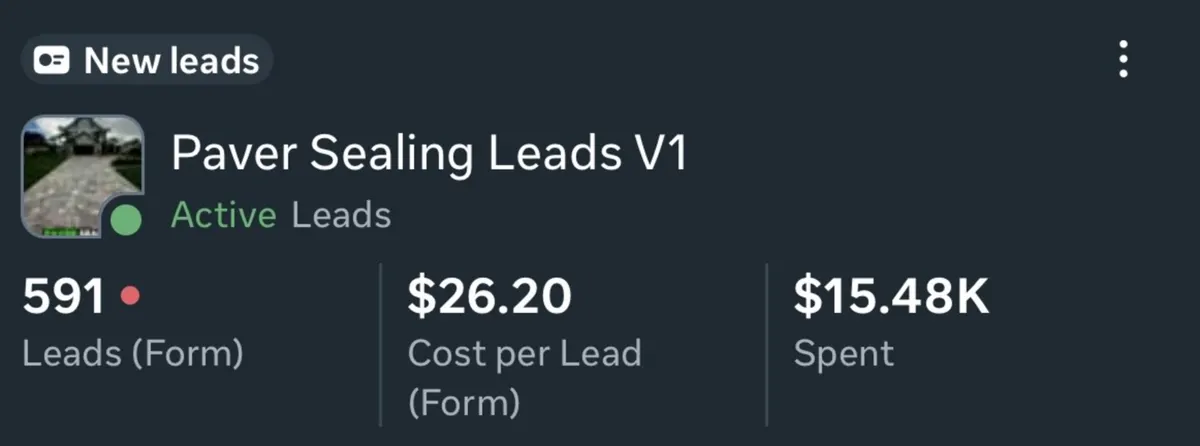
Ten years buying ads and $100M+ in managed spend, now pointed at your zip code.
If you can sell, and you want customers now, this is the closest thing to a money printer this industry has. If you cannot answer the phone, it is the fastest way to waste money — so that condition is doing real work.
It works the way you already see it work. Someone scrolls Facebook or Instagram, a video of the exact service they need lands in front of them, they fill in the form, and their details come to you. Demand created, not waited for. Data Chasing chases that data for you.
Data Chasing builds the campaigns, writes the creative and manages the spend. You pay Meta directly and Data Chasing never touches your card.
- What you do
- Answer more calls.
- When you see it
- First week of the campaign.
Google Ads management
Captures demand that already exists, the moment someone searches.
Meta catches them scrolling. Google catches them searching. A full calendar uses both.
Think of Google as the 911 call. The AC is down, the pipe burst — nobody scrolls, they search, and they are ready to hand the job to whoever shows up first. If you are a 911 business — plumbing, AC, emergency work — you need to be there, and that is where Data Chasing puts you. It is the one I recommend first for those trades.
Google Ads runs on data: bids, search terms, conversion tracking. Chasing data is literally the name of the company.
Data Chasing builds the campaigns, chooses the search terms and manages the spend. You pay Google directly and Data Chasing never touches your card.
- What you do
- Answer more calls.
- When you see it
- First week of the campaign.
Local SEO
Compounds the whole thing, month after month.
If you want to be found locally for the services you sell, this is the part that does it. Part 03 gets the profile right; this goes deeper on the profile AND the website, because the two have to match up.
That matching is the whole principle. If your Google profile says one thing and your website says another, Google trusts neither. When they agree, Google can treat your business as one solid fact instead of three conflicting guesses.
In practice it is around thirty pages, rather than a single page trying to cover everything:
- A page for each service you sell.
- A page for each town you sell it in.
- Titles and descriptions written per page.
- Internal links between them, and local business markup so the details match your listing.
How much of it you need depends on your competition. A crowded market takes a lot more than an empty one, and Data Chasing will tell you which one you are in rather than sell you the same package either way.
Again, it is all data — pages, listings, reviews, all saying the same thing. Chasing it is the job.
It compounds for years, but it is not where Data Chasing starts — reactivation and your site earn first. And Data Chasing does not sell rankings: where you land is Google’s call and nobody can promise a position. What Data Chasing commits to is the work and a plain account of what changed.
See a site built on this structure
- What you do
- Tell Data Chasing which cities you actually cover.
- When you see it
- Pages go live in the first month; search results move slowest of anything here.
Questions about the services.
The questions that decide which of these services a home service company should start with.
Do I have to buy all six services?
No. Most companies start with database reactivation and a website, because that combination earns fastest. Google Business Profile management and local SEO are usually next, since they compound the longer they run. Meta and Google Ads come last, once there is a site worth sending traffic to and a system that answers the phone.
What is database reactivation?
Database reactivation is marketing to people who already paid you once. Data Chasing loads your past-customer list into a texting system and sends a two-message sequence. Because those people already trust you, it books jobs faster and cheaper than any advertising can.
Can you work with my existing website?
Data Chasing improves an existing website when it is fast, structured properly and easy to edit, and rebuilds it when it is not. A slow template with no local SEO foundation costs more to fix than to replace. Data Chasing tells you which case you are in on the call.
What trades do you work with?
Pressure washing, paver sealing, roofing, HVAC, lawn care, pool service, painting and pest control. Data Chasing works with home service companies across the United States.